
Texas Occupational License Court Petition — Filing Requirements
Free to compare
The Court Petition Requirement Most Texas Drivers Miss
You searched for Texas occupational license information expecting a DPS administrative form. What you actually face is a formal court petition filed with your county's district or constitutional court—a legal document requiring specific statutory language under Texas Transportation Code §521.241 that most drivers don't discover until the county clerk rejects their first attempt. The Texas Occupational Driver License (ODL) is the only state hardship program that bypasses the licensing agency entirely and puts eligibility determination in the hands of a judge.
This procedural reality creates three failure points administrative hardship programs don't have: the petition itself must cite the correct statute and frame essential need in legally sufficient terms, the supporting documentation must prove the need with employer or school verification, and the filing must happen in the correct county court within 15 days of your suspension effective date to preserve your hearing window. Generic hardship license templates downloaded from other states will be rejected at filing—Texas county clerks enforce jurisdiction-specific petition format requirements that vary slightly by county.
“County clerks reject petitions that omit statutory citations, lack employer verification, or fail to attach proposed orders with specific addresses and time windows.”

Keep Your Work License Covered
Get My Occupational License Insurance Quote15 days
Texas ODL Petition Filing Window
From your suspension effective date (not arrest date, not conviction date), you have 15 days to file the Essential Need Petition with the county court to preserve your statutory hearing right. Miss this window and most counties require you to wait for the next available docket, adding 30-60 days to your timeline.
Texas Transportation Code §521.242
What the Essential Need Petition Must Contain
The petition is not a fill-in-the-blank form. It is a written request to the court stating your name, driver license number, the suspension authority (typically Texas DPS under Administrative License Revocation), the specific essential needs you are requesting permission to meet, and the statutory basis under Transportation Code §521.241. Most counties require you to attach a proposed court order as Exhibit A showing the exact routes, days, and time windows you are requesting—the judge will either sign your proposed order as written or modify it at the hearing.
Essential need in Texas has the broadest statutory definition in the country: driving to and from work, driving in the course of employment if your job requires it, driving to and from school or an educational program, driving to perform essential household duties (including childcare pickup, grocery shopping, and medical appointments), and driving for court-ordered obligations or religious services. You must document each category you request. Work requires a letter from your employer on company letterhead stating your job title, work address, shift hours, and whether your job requires driving. School requires enrollment verification or a class schedule. Household duties require documentation of dependents or medical needs—courts will not approve vague 'household duties' without proof of the specific recurring obligation.
The petition must be notarized before filing. Most county clerks reject unnotarized petitions outright. You will pay a filing fee at the time of submission—fees vary by county because the ODL is a court matter, not a standardized DPS administrative fee. Expect $100-$300 depending on the county. The clerk will assign a case number and set a hearing date, typically 10-30 days out.

County clerks will not file petitions that omit the statutory citation (Transportation Code §521.241), fail to attach employer verification, or lack a proposed order with specific addresses and time windows.
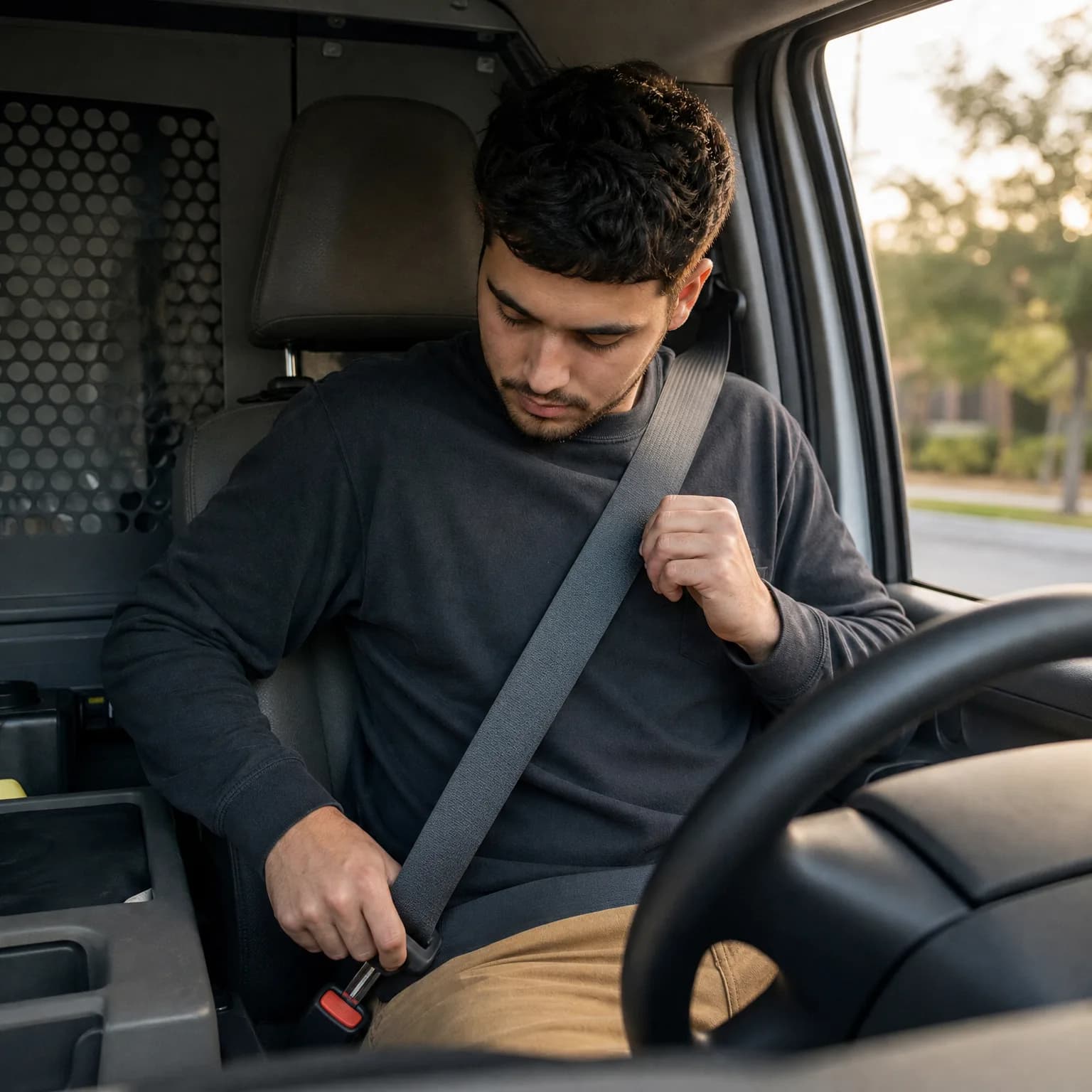






The Court Order Defines Your Driving Restrictions
If the judge grants your petition, the court order becomes your license. It specifies the exact addresses you are permitted to drive to and from, the days of the week each route is authorized, and the time windows during which you may drive. Texas law caps ODL driving at 12 hours per day maximum regardless of how many essential needs you list—judges enforce this ceiling strictly. The order will also state whether you are required to install an ignition interlock device (mandatory for all alcohol-related suspensions under Transportation Code §521.246) and the duration of the ODL, which cannot exceed one year from the date of issuance.
You must carry the signed court order with you whenever driving under ODL authority. Law enforcement will verify your route and time compliance during any traffic stop—driving outside your authorized routes, outside your authorized time windows, or for purposes not listed in the order is a Class B misdemeanor under Texas Penal Code §521.457, punishable by up to 180 days in jail and immediate ODL revocation. Courts do not grant leniency for incidental violations like stopping for gas on the way home or detouring to a non-approved location.
After the hearing, the court transmits the signed order to DPS. DPS does not issue the physical ODL card until they receive the court order, confirm your SR-22 certificate of financial responsibility is on file, and verify ignition interlock installation if required. This transmission and processing step adds 7-14 business days after your hearing before you can pick up the physical card at a DPS office. Most drivers assume the court order itself authorizes them to drive immediately—it does not. You cannot legally drive under ODL authority until the physical card is in your possession.
$50–$125/mo
Texas IID Monthly Monitoring Cost
Ignition interlock is mandatory for all alcohol-related ODL cases. Installation runs $75-$150, and monthly monitoring (calibration, data download, and service) adds $50-$125 every 30 days for the full duration of your ODL and underlying suspension period—typically 12-24 months minimum. This cost is separate from and in addition to SR-22 premium impact.
Texas ignition interlock vendor pricing, 2025

SR-22 Filing Precedes License Issuance
DPS will not process your ODL until SR-22 certificate of financial responsibility is electronically filed and confirmed in their system. The court order authorizes the license—SR-22 proves you can pay for damage if you cause a crash while driving under restricted authority. All ODL holders must maintain SR-22 for the duration specified by the underlying suspension cause, typically two years from reinstatement for DWI cases under Transportation Code §601.153.
SR-22 insurance is not a separate policy—it is a state filing attached to an active auto insurance policy (or a non-owner policy if you do not own a vehicle). The insurer charges a one-time filing fee ($15-$50) and monthly premiums reflecting your high-risk classification. Expect premiums 40-80% higher than standard rates for the SR-22 duration. If your SR-22 lapses for even one day—because you missed a payment, switched carriers without filing continuity, or canceled the policy—DPS receives an electronic cancellation notice and will suspend your ODL immediately without additional warning. Reinstatement after SR-22 lapse requires starting the entire court petition process over.
What Happens Next
Pull your suspension notice from DPS and identify the suspension effective date—that is day one of your 15-day filing window. Draft your Essential Need Petition citing Transportation Code §521.241, attach a proposed court order with specific addresses and time windows, and gather employer verification, school enrollment, or household duty proof for every category you request. Have the petition notarized, file it with your county's district or constitutional court clerk (not DPS), and pay the filing fee. The clerk will assign a hearing date.
At the hearing, bring original documentation proving every essential need listed in your petition. If the judge grants the ODL, arrange SR-22 filing immediately and schedule ignition interlock installation if required. Once DPS confirms both filings, you will receive notice to pick up your physical ODL card. Until that card is in hand, you cannot legally drive—the court order alone does not authorize operation. Start your petition process now if you are within the 15-day window.
Required Documentation for the Court Hearing
For work-related driving: employer letter on company letterhead (signed by a supervisor or HR representative, not a coworker) stating your job title, work address, specific shift days and hours, whether the job is full-time or part-time, and whether your duties require driving during work hours. If you are self-employed, bring business registration documents, recent tax returns, and signed contracts or invoices showing active client relationships. Courts will deny petitions from self-employed applicants who cannot prove recurring income-generating activity.
For school or educational programs: official enrollment verification letter from the registrar, current class schedule showing days and times, and school address. For household duties: birth certificates or custody orders for dependent children, medical records or prescription documentation proving recurring medical appointments, and lease or mortgage documents showing household address. For court-ordered obligations: copy of the probation order, community service assignment letter, or court-ordered treatment program schedule. Missing any category-specific proof means the judge will strike that essential need from your proposed order even if the rest is approved.
Get Your Free Quote
Get My Occupational License Insurance QuoteFrequently Asked Questions
Can I file a Texas ODL petition without a lawyer?
Yes. Texas Transportation Code §521.241 does not require attorney representation for ODL petitions, and most drivers file pro se. However, you must draft the petition in legally sufficient form, cite the correct statute, and attach all required documentation. County clerks cannot provide legal advice—if your petition is defective, it will be rejected at filing and you will lose days from your 15-day window.
What happens if the judge denies my Texas ODL petition?
Denial is final for that petition. You cannot refile the same essential need request unless your circumstances change materially (new job, new school enrollment, new dependent). Most denials result from insufficient documentation or failure to prove the essential need is non-discretionary. You remain under full suspension and must wait until your suspension period expires or pursue full license reinstatement through DPS if eligible.
Can I add routes to my Texas ODL after the court order is signed?
Not without filing a motion to modify the court order. You must petition the same court that issued the original ODL, provide documentation proving the new essential need, and attend a modification hearing. Judges grant modifications only for documented changes in employment, school enrollment, or household circumstances—not for convenience or preference. Driving to unapproved locations before the modification is granted is a criminal violation.
Does Texas ODL restore my full driving privileges?
No. An ODL authorizes driving only for the essential needs listed in the court order, only on the routes specified, and only during the time windows approved by the judge. All other driving remains prohibited and constitutes a Class B misdemeanor. The ODL does not remove or shorten your underlying suspension—it creates a restricted exception within that suspension period.
How much does SR-22 cost for a Texas ODL?
Carriers charge a one-time filing fee of $15-$50, then monthly premiums reflecting high-risk classification. Expect premiums 40-80% higher than standard rates—typically $85-$140/month for minimum liability coverage with SR-22 attached. Non-owner SR-22 policies (if you do not own a vehicle) cost slightly less, around $60-$100/month. Premiums stay elevated for the full SR-22 duration, typically two years.