
Occupational Driver License While Suspended — Texas
Free to compare
Court Petition Before DPS Application
You lost your Texas license to a DWI suspension and need to drive to work Monday morning. Most drivers call DPS first, assuming the Occupational Driver License application starts there. It does not. Texas requires you to petition a district or county court for an order granting occupational driving privileges before DPS can issue the physical license. Calling DPS without a court order wastes the time you do not have.
The Texas Transportation Code places ODL eligibility determinations entirely with the courts under §521.241. DPS functions only as the issuing agency after the court grants the order. You cannot skip the court step. You cannot apply to DPS directly. The procedural sequence is locked: file the Essential Need Petition with the court, obtain the signed order, present the order plus SR-22 certificate to DPS, then receive the physical ODL card.
“Texas places ODL eligibility determinations entirely with the courts — DPS cannot issue the license until you present a signed court order.”

Keep Your Work License Covered
Get My Occupational License Insurance Quote90 days
DWI Hard Suspension Before ODL
Texas Transportation Code Chapter 724 imposes a mandatory 90-day hard suspension for first-offense DWI-related Administrative License Revocation before you can petition for an occupational license. The clock starts from your arrest date, not your conviction date.
Texas Transportation Code §724.035
Two Separate DWI Suspensions Running Simultaneously
Texas DWI cases trigger two independent suspension tracks. The Administrative License Revocation program operates under Texas Transportation Code Chapter 724 and activates when you refuse a breath test or fail with a BAC at or above 0.08. This administrative suspension runs regardless of whether the criminal court ever convicts you. The criminal court imposes a second suspension upon conviction under Penal Code Chapter 49. Both suspensions appear on your DPS driving record, and both require separate clearance before full reinstatement.
The ODL court petition addresses both suspensions if both are active. Your court order lists all active suspension causes and applies the ODL terms across both. You do not file two separate petitions. The court evaluates your essential need claim once and issues a single order covering the entire suspension period, whether that period results from the ALR suspension, the criminal conviction suspension, or both running concurrently.
After the ODL expires and your full suspension period ends, you must clear both suspensions at DPS to reinstate your regular license. The ALR suspension requires proof you completed the suspension term or qualified for early termination. The criminal conviction suspension requires proof of conviction-related requirements like DWI education completion. DPS will not reinstate until both tracks show cleared status, even if the ODL allowed you to drive during the suspension window.
The court petition fails if you have not installed the ignition interlock device before filing. Courts require proof of IID installation as a condition of granting the ODL order.


Court-Defined Route and Hour Restrictions
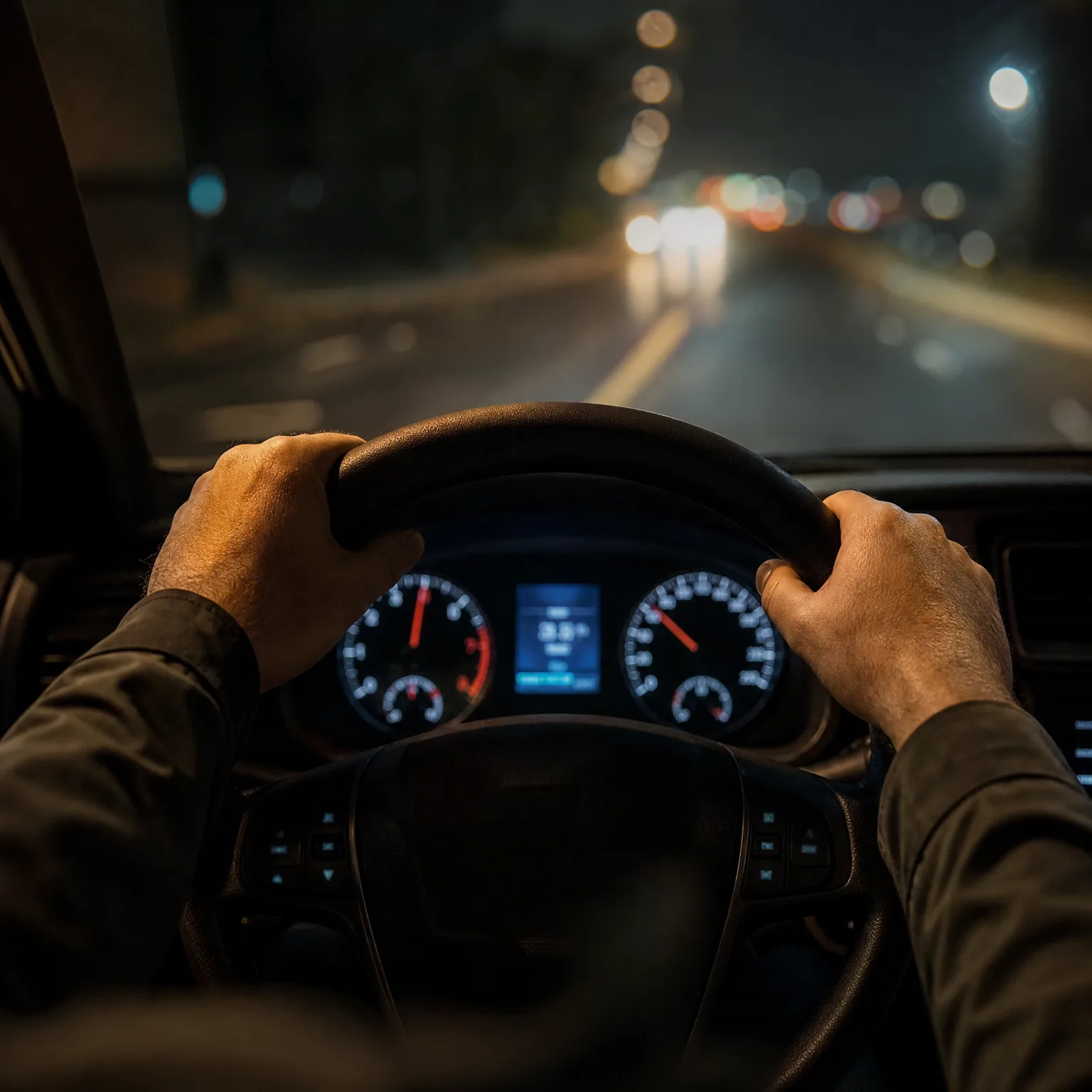
Texas Transportation Code §521.246 caps ODL driving at 12 hours in any 24-hour period regardless of how many essential needs your court order lists. If you work an 8-hour shift and attend school for 4 hours, you have exhausted your daily driving allowance and cannot add medical appointments or household errands that day without violating the order. The 12-hour limit is statutory and applies statewide — no court can grant more driving time.
Your court order specifies every approved route by street name and lists the exact addresses you are authorized to drive between. Courts typically grant work, school, medical appointments, essential household duties including childcare and grocery shopping, and attendance at court-ordered programs or religious services. The order does not grant generalized permission to drive anywhere for approved purposes — it names specific locations. Driving to a second grocery store not listed in your order violates the restriction even if grocery shopping is an approved purpose category.
Law enforcement officers have full access to the ODL database during traffic stops. If you are stopped driving outside your approved hours or routes, the officer sees the violation immediately on the computer system. Most counties treat ODL violations as criminal contempt of court rather than simple traffic infractions, exposing you to immediate license revocation and potential jail time for contempt in addition to extending your underlying suspension period.
$125
Texas DPS Reinstatement Fee
After your full suspension period ends and the ODL expires, DPS charges a $125 reinstatement fee to restore your regular unrestricted license. This fee is separate from any court filing fees, SR-22 setup costs, or IID charges you paid during the ODL period.
Texas Department of Public Safety fee schedule

SR-22 Filing Setup and Premium Impact
Texas requires SR-22 financial responsibility filing for the entire ODL period plus two years after full reinstatement for DWI-related suspensions under Texas Transportation Code §601.153. The SR-22 is not insurance — it is a certificate filed by your carrier with DPS proving you maintain continuous liability coverage at Texas minimum limits of $30,000 per person, $60,000 per accident for bodily injury, and $25,000 for property damage. If your policy lapses for any reason during the filing period, the carrier notifies DPS electronically within 10 days and your ODL is suspended immediately.
SR-22 carriers available in Texas include GAINSCO, Dairyland, Progressive, Geico, Bristol West, Direct Auto, The General, and Infinity. Not all standard carriers write SR-22 policies — State Farm writes SR-22 in Texas but assigns DWI cases to higher-rate underwriting tiers. Typical monthly premiums for Texas SR-22 DWI cases range from $180 to $340 depending on age, county, and prior violations. Non-owner SR-22 policies cost less, typically $85 to $140 per month, but only cover you when driving borrowed or rented vehicles — not a vehicle titled in your name.
Compare Texas SR-22 Carriers Filing ODL Coverage
You need active SR-22 filing before the court will approve your ODL petition. Waiting until after the court hearing to shop for coverage delays your license issuance by weeks. Carriers require 3 to 7 business days to process SR-22 certificates and transmit them to DPS electronically. Courts schedule ODL hearings 4 to 8 weeks out in most Texas counties, giving you time to compare rates and lock coverage before your hearing date.
Start by requesting quotes from non-standard carriers that specialize in DWI cases: GAINSCO operates statewide in Texas and offers same-day SR-22 electronic filing for approved applicants. Dairyland and Bristol West both write Texas ODL SR-22 policies and offer monthly payment plans without requiring full-term payment upfront. Compare the monthly premium, the SR-22 filing fee which typically ranges from $25 to $50, and whether the carrier requires ignition interlock-specific endorsements that add cost. Verify the carrier can file the SR-22 electronically with DPS — paper filings delay court approval.
Essential Need Petition Documentation Stack
Employment verification requires a signed letter from your employer on company letterhead stating your job title, work address, scheduled shift hours, and confirmation that you must drive to perform essential job duties. If you claim multiple job sites, the employer letter must list every address you drive to regularly. Self-employed petitioners submit business registration documents, client contracts showing scheduled obligations, and a notarized affidavit describing driving requirements. Courts reject vague employer letters that do not specify exact addresses and hours.
SR-22 certificate of financial responsibility must show active filing status with the Texas Department of Public Safety listed as the certificate holder. The SR-22 filing date must precede your court hearing date. Courts will not accept an SR-22 application receipt or a pending filing confirmation — only a fully processed certificate showing DPS acknowledgment. Ignition interlock installation documentation requires the vendor's signed affidavit confirming the device was installed in the vehicle you will drive under the ODL, the device serial number, and the monthly monitoring schedule. Courts reject IID purchase receipts or appointment confirmations without proof of completed installation.
Get Your Free Quote
Get My Occupational License Insurance QuoteFrequently Asked Questions
Can I apply for a Texas Occupational Driver License online through DPS?
No. Texas requires you to file an Essential Need Petition with a district or county court first. DPS cannot accept direct ODL applications. After the court grants your petition and issues the signed order, you present that order plus your SR-22 certificate to DPS to receive the physical ODL card.
How long does the Texas ODL court petition process take from filing to license issuance?
Courts typically schedule ODL hearings 4 to 8 weeks after you file the petition. After the court grants the order, DPS issues the physical ODL card within 10 business days if you present a complete documentation stack including the court order, SR-22 certificate, and IID installation affidavit. Total timeline from petition filing to driving legally: 6 to 10 weeks in most counties.
What happens if I drive outside my approved ODL routes in Texas?
Driving outside approved routes or hours violates your court order and exposes you to criminal contempt charges. Most Texas counties treat ODL violations as contempt of court rather than traffic infractions, allowing immediate license revocation, extension of your underlying suspension period, and potential jail time for contempt. Law enforcement officers see your ODL restrictions in real time during traffic stops.
Does the Texas Occupational Driver License allow me to drive for Uber or Lyft?
Courts rarely approve rideshare driving as an essential need under the ODL statute. Texas Transportation Code §521.242 limits approved purposes to work, school, essential household duties, and medical needs. Rideshare work does not qualify as essential employment in most county court interpretations because alternative employment options exist that do not require driving passengers.
Can I get a Texas ODL if I refused the breath test during my DWI arrest?
Yes, but you face a longer ALR suspension period. Breath test refusal triggers a 180-day administrative suspension for first offenders under Texas Transportation Code §724.035, compared to 90 days for failing the test. You must complete the mandatory 90-day hard suspension before filing your ODL petition. Refusal cases also require ignition interlock installation as a condition of ODL approval.
How much does SR-22 insurance cost for a Texas Occupational Driver License?
Typical monthly premiums for Texas SR-22 DWI policies range from $180 to $340 depending on age, county, and violation history. Non-owner SR-22 policies cost less, approximately $85 to $140 per month, but only cover you when driving borrowed or rented vehicles. Add a one-time SR-22 filing fee of $25 to $50 and ongoing ignition interlock costs of $70 to $120 per month.
Do I need a lawyer to file a Texas Occupational Driver License petition?
Texas law does not require attorney representation for ODL petitions, but most drivers hire counsel because procedural errors result in automatic petition denial without the option to amend. Attorneys familiar with county-specific court preferences draft petitions that match local judicial expectations, increasing approval probability. Self-represented petitioners face denial rates above 40 percent in urban counties due to incomplete documentation.