
Occupational License With No Prior Insurance
Free to compare
The First-Time Coverage Block
You received court approval for an occupational license in Texas, Pennsylvania, or Wisconsin and discovered the license requires SR-22 insurance filing. You've never carried auto insurance before — no lapse, no cancellation, just zero prior coverage history. When you contacted carriers for quotes, half rejected you immediately. The other half quoted premiums 40–60% higher than the rates you found online.
This is the first-time applicant penalty. Carriers tier risk using prior insurance history as the primary underwriting signal. No history reads as higher risk than a lapsed policy, because the carrier has no claims data, no payment behavior, and no actuarial track record to price against. Most standard carriers refuse to write occupational license policies for first-time applicants. You're pushed into the non-standard market before you've driven a single mile.
“No prior coverage history reads as higher actuarial risk than a lapsed policy — carriers have zero claims data to price against.”
Keep Your Work License Covered
Get My Occupational License Insurance Quote$180–$240/mo
First-Time OL Premium Range
Non-standard carriers pricing occupational license coverage for applicants with zero prior insurance history typically quote $180–$240/month for state minimum liability plus SR-22 filing, compared to $95–$140/month for applicants with prior continuous coverage. The gap reflects actuarial uncertainty, not driving record.
Non-standard carrier rate filings, 2024
Why Standard Carriers Reject First-Time Applicants
Standard carriers — State Farm, Geico, Progressive, Allstate — build underwriting models on prior insurance continuity. The model assumes a driver with continuous coverage for three years presents lower claim probability than a driver who let coverage lapse. A driver with zero prior coverage breaks the model entirely. The carrier has no baseline to price against.
When you add an occupational license restriction and SR-22 filing requirement on top of zero prior history, standard carriers classify you as uninsurable under their underwriting guidelines. The rejection isn't personal. It's algorithmic. Their models can't generate a defensible premium without prior coverage data, so they decline the application rather than misprice the risk.
Texas, Pennsylvania, and Wisconsin occupational license applicants face this rejection wall consistently. Court approval for the license doesn't override carrier underwriting rules. The DMV or PennDOT doesn't certify you as insurable. The carrier makes that determination independently, and first-time applicants fail the continuity test most standard carriers require.
Standard carriers won't write occupational license policies for first-time insurance applicants — you need a non-standard carrier that underwrites without prior coverage history as a gate.





How SR-22 Filing Works Without Prior Coverage
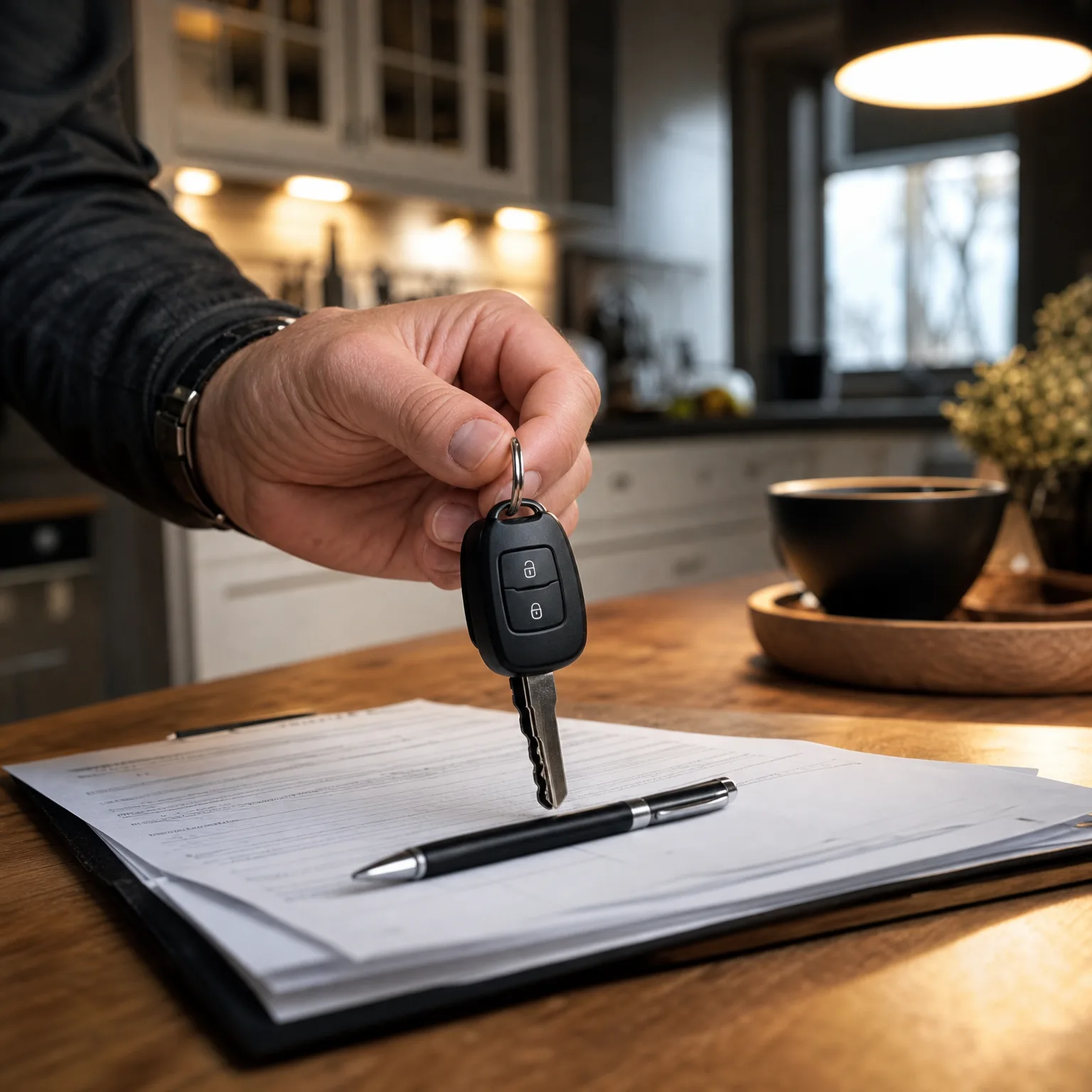
SR-22 is a state compliance form your carrier files electronically with the DMV, PennDOT, or Wisconsin DOT certifying you carry the state-required minimum liability coverage. The filing isn't a separate insurance product. It's a certificate attached to an active auto policy. When you have zero prior insurance history, the SR-22 filing happens simultaneously with your first policy inception.
The carrier writes the policy, generates the SR-22 certificate, and transmits it to the state electronically within 24–48 hours of your first premium payment. Texas DPS, PennDOT, and Wisconsin DOT receive the filing confirmation and update your driver record to reflect active SR-22 status. The occupational license remains invalid until SR-22 confirmation posts to the state system. In Wisconsin, the DMV won't issue the physical occupational license card until SR-22 electronic confirmation hits their system — court approval alone doesn't trigger license issuance.
If your SR-22 policy lapses for nonpayment or cancellation, the carrier notifies the state within 24 hours. The state suspends your occupational license immediately. There is no grace period. Pennsylvania revokes the Occupational Limited License the same day PennDOT receives the lapse notification. Texas DPS suspends the Occupational Driver License within 48 hours. You cannot reinstate the occupational license until a new SR-22 filing posts and you pay a reinstatement fee (typically $125–$175 depending on state). First-time insurance holders face higher lapse risk because they have no payment history or autopay habit established. Set up autopay at policy inception to avoid unintentional lapse.
24 hours
SR-22 Lapse Notification Window
When an SR-22 policy cancels for nonpayment or voluntary termination, the carrier notifies the state licensing agency within 24 hours. Pennsylvania, Texas, and Wisconsin suspend the occupational license immediately upon receiving the lapse notification, with no grace period for reinstatement.
Pennsylvania PennDOT, Texas DPS, Wisconsin DOT administrative rules

The Cost Stack for First-Time Applicants
First-time occupational license insurance applicants face a four-layer cost structure: the occupational license application fee, the ignition interlock device (IID) if required, the SR-22 filing fee, and the sustained monthly premium. Texas Occupational Driver License application costs $10 filed with the county court. Pennsylvania Occupational Limited License application costs $25 submitted to PennDOT. Wisconsin Occupational License application costs $50 filed with the Wisconsin DOT. These are one-time fees payable at application.
If your suspension resulted from DUI, DWI, or OWI, all three states require ignition interlock installation on any vehicle you operate under the occupational license. IID installation costs $75–$150. Monthly monitoring fees run $60–$90. Texas typically requires IID for the full occupational license duration (often 1–2 years). Pennsylvania requires IID for 1 year post-ARD or longer post-conviction. Wisconsin requires IID for 1–3 years depending on OWI count. The IID vendor bills separately from insurance; the carrier does not bundle these costs into your premium.
Requesting Quotes as a First-Time Applicant
When you contact non-standard carriers for occupational license quotes, state upfront that you have zero prior insurance history. This prevents quote estimates based on lapsed-coverage assumptions that don't apply to your situation. Provide your court-approved occupational license documentation showing approved driving hours and approved purposes. Carriers need this to tier the premium correctly. Texas Essential Need Petition approval, Pennsylvania OLL court order, or Wisconsin occupational license approval letter serves as the underwriting document the carrier uses to generate the quote. Compare at least three non-standard carriers. Premiums vary by $40–$80/month between carriers even when quoting identical coverage for the same occupational license terms. The General, Bristol West, and Dairyland consistently quote first-time occupational license applicants in all three states. Request quotes directly rather than through aggregators — aggregators often exclude non-standard carriers from their panels, leaving you with rejection notices from standard carriers who won't write the policy regardless of premium offered.
Non-Standard Carriers That Write First-Time OL Policies
Non-standard carriers include The General, Direct Auto, Acceptance Insurance, Bristol West, Dairyland, and regional specialty carriers operating in Texas, Pennsylvania, and Wisconsin. These carriers write policies for drivers with suspended licenses, DUI convictions, SR-22 filing requirements, and zero prior coverage. Their underwriting models tier risk using factors beyond insurance continuity: age, county, vehicle type, approved driving hours on the occupational license, and suspension cause. First-time applicants pay higher premiums than applicants with prior coverage, but the carrier accepts the application rather than rejecting it outright.
When you request quotes from non-standard carriers, provide the court-approved occupational license documentation, the approved driving hours (8-hour, 12-hour, or 16-hour daily window), and the suspension cause that triggered the license requirement. Carriers tier premiums based on approved hours — a 12-hour occupational license costs 15–25% more than an 8-hour license because longer daily exposure increases collision probability. The SR-22 filing fee (typically $25–$50) is separate from the policy premium and billed at policy inception.
Get Your Free Quote
Get My Occupational License Insurance QuoteFrequently Asked Questions
Can I get occupational license insurance if I've never had auto insurance before?
Yes, but you'll need a non-standard carrier. Standard carriers (State Farm, Geico, Progressive) reject applicants with zero prior insurance history because their underwriting models require coverage continuity data. Non-standard carriers like The General, Bristol West, and Dairyland write occupational license policies for first-time insurance applicants, though premiums run 40–60% higher than quotes for applicants with prior coverage.
How much does occupational license insurance cost for a first-time applicant?
Non-standard carriers typically quote $180–$240/month for state minimum liability plus SR-22 filing when you have zero prior insurance history. This compares to $95–$140/month for applicants with continuous prior coverage. The premium gap reflects actuarial uncertainty, not driving record. Approved occupational license hours also affect pricing — 12-hour licenses cost 15–25% more than 8-hour licenses.
Do I need to buy insurance before applying for an occupational license?
No. Apply for the occupational license first. Texas, Pennsylvania, and Wisconsin require SR-22 filing to activate the license, but you cannot obtain SR-22 until the court or DMV approves your occupational license application. The sequence is: apply for occupational license, receive court or administrative approval, purchase insurance with SR-22 filing, then activate the license once SR-22 confirmation posts to the state system.
What happens if my SR-22 insurance lapses and I've never had coverage before?
The state suspends your occupational license within 24–48 hours of the carrier notifying them of the lapse. Pennsylvania, Texas, and Wisconsin provide no grace period. You cannot reinstate the occupational license until you purchase a new policy, file a new SR-22, and pay a reinstatement fee (typically $125–$175). First-time insurance holders face higher lapse risk because they lack payment history — set up autopay at policy inception.
Why do standard carriers reject first-time insurance applicants for occupational licenses?
Standard carriers underwrite using prior insurance continuity as the primary risk signal. Zero prior coverage breaks their actuarial models — they have no baseline claims data, payment behavior, or coverage gaps to price against. When you add occupational license restrictions and SR-22 filing requirements, standard carriers classify you as uninsurable under their guidelines and decline the application algorithmically rather than quote an uncertain premium.
Can I get non-owner SR-22 insurance if I've never had insurance before?
Yes. Non-owner SR-22 policies cover liability when you drive vehicles you don't own, making them ideal for occupational license holders who use employer vehicles or borrow cars. Non-standard carriers write non-owner policies for first-time applicants, though premiums are only 10–20% lower than standard owner policies because the SR-22 filing requirement dominates the risk tier. Non-owner SR-22 costs approximately $160–$210/month for first-time applicants.
How long do I need to keep SR-22 filing with my occupational license?
SR-22 duration depends on your suspension cause and state. Texas typically requires 2 years. Pennsylvania requires 1 year post-ARD or 3 years post-DUI conviction. Wisconsin requires 3 years post-OWI. The SR-22 filing must remain active for the full period even after your occupational license converts to a full unrestricted license. If you cancel the SR-22 before the mandated period ends, the state suspends your license again.