
CDL and Texas Occupational License — Overlapping Rules
Free to compare
The CDL Question Texas Courts Cannot Answer
You received a DUI in your personal vehicle and Texas suspended your driver license. You hold a Commercial Driver License and your employer needs an answer: can you get back on the road with a Texas Occupational Driver License that covers commercial operation? The short structural answer is no — an ODL issued by a Texas court cannot restore or substitute for a disqualified CDL.
Federal Motor Carrier Safety Administration regulations govern CDL disqualification independently of state hardship programs. When Texas DPS disqualifies your CDL after a DUI conviction, that disqualification follows federal timelines and federal reinstatement rules. A Texas district or county court has no authority to override FMCSA disqualification periods or waive federal CDL reinstatement requirements, even when the court approves an Occupational Driver License petition for personal driving.
“Federal FMCSA rules supersede state hardship programs — Texas court ODL approval means nothing for commercial vehicle operation during disqualification.”

Keep Your Work License Covered
Get My Occupational License Insurance Quote1 year minimum
Federal CDL Disqualification First DUI
FMCSA regulations mandate a minimum one-year CDL disqualification for a first alcohol-related offense. No state hardship program can shorten this federal period, and Texas ODL authority does not extend to commercial vehicle operation.
49 CFR 383.51 — FMCSA CDL disqualification periods
What an ODL Actually Covers
The Texas Occupational Driver License authorizes driving for essential needs enumerated in the court order: work, school, performance of essential household duties, medical appointments, court appearances, and religious services. The court defines specific routes and permitted hours — typically capped at 12 hours per day under Texas Transportation Code §521.246.
ODL restrictions apply to the class of vehicle you are permitted to operate. When a court grants an ODL, the order specifies personal vehicle operation only. Commercial Motor Vehicle operation — defined under federal law as any vehicle requiring a CDL to operate — is categorically excluded from ODL scope. The distinction is not about where you drive or why you drive; it is about vehicle classification.
You cannot petition a Texas court for an ODL that permits operating a Class A tractor-trailer, a Class B bus, or any vehicle requiring CDL endorsements. Federal law preempts state court authority on this question. If your job requires operating a CMV, the ODL does not solve your employment problem.

An approved Texas ODL permits personal vehicle operation only — commercial vehicle driving remains federally disqualified for the full FMCSA period regardless of court order.

What Happens to Your CDL During Disqualification
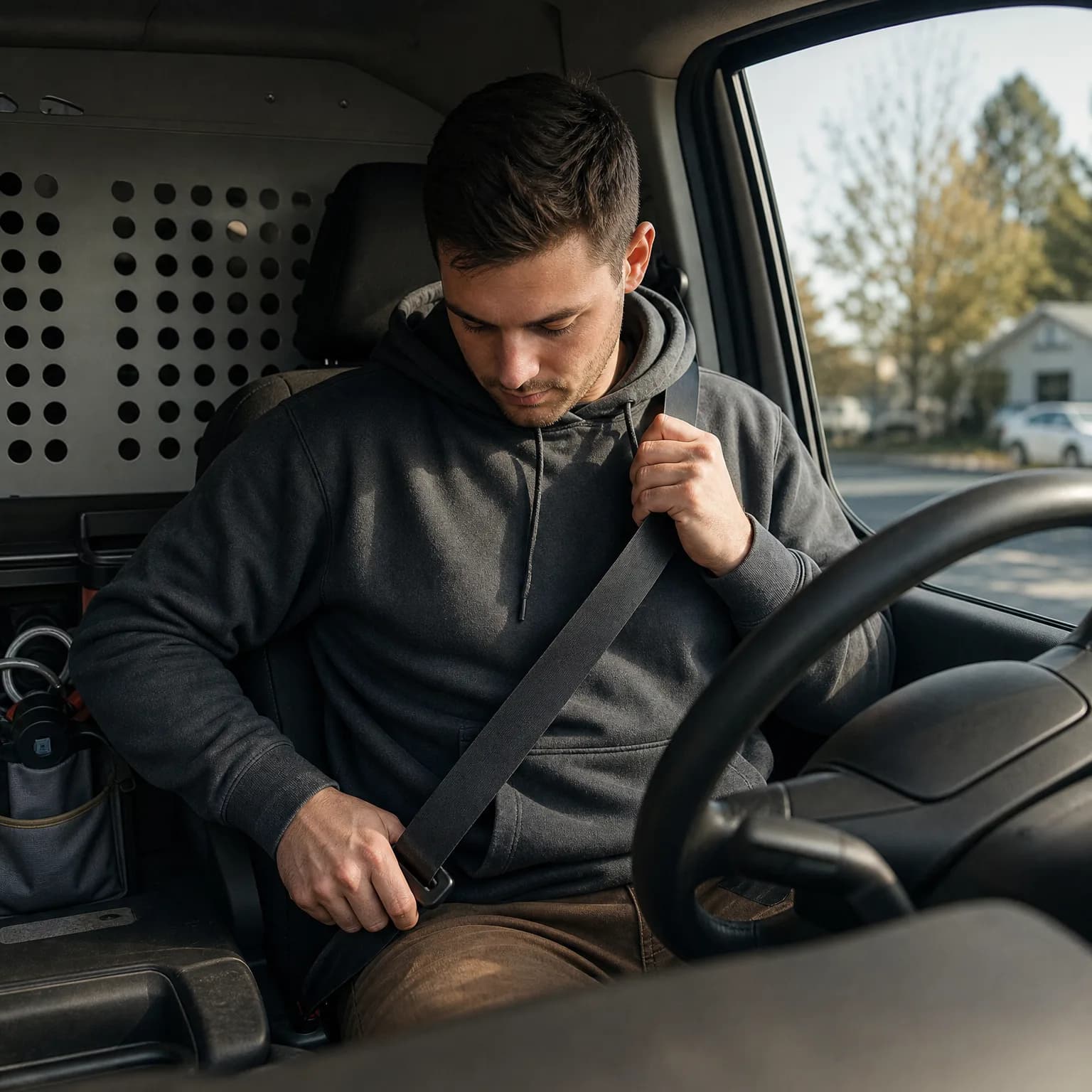
Texas DPS does not issue two separate physical licenses — your CDL card carries your authority to operate both personal vehicles and commercial vehicles. When DPS disqualifies your CDL after a DUI, the physical card remains valid for personal vehicle operation unless a separate personal-license suspension applies. If both suspensions are active, you lose all driving privileges until you address the personal suspension first.
During CDL disqualification, you can petition for an ODL to restore personal driving privileges, but the CDL endorsement remains disqualified. You will hold an ODL that permits personal vehicle operation under court-defined restrictions while your CDL authority remains suspended under federal rules. Employers cannot legally permit you to operate a CMV during this period, and doing so exposes both you and the carrier to federal penalties.
After the federal disqualification period expires, you must apply to Texas DPS for CDL reinstatement. The process requires paying reinstatement fees, providing proof of SR-22 filing for the duration specified by Texas law (typically two years post-DUI), and retaking CDL knowledge and skills tests in most cases. The ODL does not exempt you from CDL requalification requirements.
$125
Texas CDL Reinstatement Fee
Texas DPS charges a $125 base reinstatement fee for CDL disqualification cases. This is separate from any personal license reinstatement fees, SR-22 filing costs, and ignition interlock expenses tied to the underlying DUI case.
Texas Department of Public Safety fee schedule
The SR-22 Stack for CDL Holders
Texas requires SR-22 financial responsibility filing for all Occupational Driver License holders under Texas Transportation Code §601.153. If you obtain an ODL while your CDL is disqualified, you must file SR-22 immediately and maintain it for two years from the date of reinstatement. When you later reinstate your CDL, Texas DPS requires continuous SR-22 coverage for the full two-year period — the clock does not reset, but any lapse during the ODL period triggers immediate revocation of both the ODL and eligibility for CDL reinstatement.
Most carriers writing SR-22 policies for suspended drivers do not differentiate between personal and commercial vehicle operation in their underwriting — the SR-22 filing itself attaches to a personal auto policy. If you no longer own a personal vehicle, you will need a non-owner SR-22 policy to satisfy the ODL requirement. The monthly premium for non-owner SR-22 coverage in Texas after a DUI typically runs $85 to $140 per month depending on age, county, and carrier. This cost continues for the full two-year filing period even after CDL reinstatement.
Path Forward for CDL Holders
If your employer cannot hold your position during the federal disqualification period, the ODL permits you to drive for non-CMV employment, medical appointments, and other essential needs while you wait out the FMCSA clock. Petition the court for an ODL that covers routes to any interim job, household duties, and required alcohol education classes. Present proof of essential need — employment letters, school enrollment, medical appointment schedules — and a completed SR-22 certificate from a licensed Texas carrier.
After the federal disqualification period expires, initiate CDL reinstatement with Texas DPS by submitting proof of completed alcohol education requirements, paying the $125 reinstatement fee, and scheduling CDL requalification testing. Maintain SR-22 coverage continuously through reinstatement and for the full two-year period Texas requires. Any SR-22 lapse during this window extends the filing requirement and delays final clearance.
The ODL court order and the CDL reinstatement process are separate procedural tracks. Do not assume completing one satisfies the other — both must be independently cleared before you can legally operate a commercial vehicle again. Contact carriers writing SR-22 policies for suspended Texas drivers as soon as you decide to pursue the ODL, because SR-22 setup takes 3 to 5 business days and the court will not approve your petition without proof of filing in hand.
The Two-Track Suspension Reality
The Administrative License Revocation program under Texas Transportation Code Chapter 724 suspends your personal driver license after a DWI arrest when you refuse a breath test or fail with a BAC at or above 0.08. This suspension is administrative, handled entirely by Texas DPS, and can be challenged at an ALR hearing within 15 days of arrest. If you hold a CDL, DPS also initiates federal CDL disqualification proceedings separately — the ALR suspension and the CDL disqualification run on different timelines and different legal standards.
Clearing the ALR suspension or obtaining an ODL for personal driving does not affect the CDL disqualification clock. FMCSA disqualification begins on the date of conviction or administrative finding and runs for the federally mandated period — one year minimum for a first offense, three years if the offense occurred while operating a CMV, and lifetime for repeat offenses. Texas DPS processes the disqualification on behalf of FMCSA but cannot waive or shorten the federal period.
Get Your Free Quote
Get My Occupational License Insurance QuoteFrequently Asked Questions
Can I drive a commercial vehicle with a Texas Occupational Driver License?
No. A Texas Occupational Driver License authorizes personal vehicle operation only for court-approved essential needs. Federal CDL disqualification remains in effect for the full FMCSA-mandated period regardless of ODL approval, and operating a CMV during disqualification exposes you to federal penalties.
How long does CDL disqualification last after a DUI in Texas?
Federal law mandates a minimum one-year CDL disqualification for a first alcohol-related offense. If the offense occurred while operating a commercial vehicle, the disqualification extends to three years. Texas DPS processes the disqualification on behalf of FMCSA but cannot shorten the federal period.
Does getting an ODL help me keep my CDL job?
An ODL permits personal driving for work-related commuting and non-CMV employment, but it does not restore your authority to operate commercial vehicles. If your job requires operating a CMV, the ODL does not solve the employment problem during the federal disqualification period.
Do I need SR-22 for both my ODL and my CDL reinstatement?
Yes. Texas requires SR-22 filing for all ODL holders and for CDL reinstatement after alcohol-related disqualification. You must maintain continuous SR-22 coverage for two years from reinstatement, and any lapse revokes both the ODL and eligibility for CDL reinstatement.
Can I take CDL requalification tests while my personal license is suspended?
No. Texas DPS requires a valid personal driver license or an active Occupational Driver License before you can schedule CDL knowledge and skills testing. Obtain your ODL first if your personal license remains suspended, then initiate CDL reinstatement after the federal disqualification period expires.